Migrating from Elementor or Divi: Escaping Page Builder Lock-In


Migrating from Elementor or Divi: Escaping Page Builder Lock-In

Elementor and Divi solved a real problem: letting non-developers build custom layouts. Between them they run on well over ten million WordPress sites. But they solved it with a trade nobody reads the terms on — your content stops being content and becomes builder-specific markup that only that builder can render. Deactivate Elementor and your pages collapse into JSON soup; deactivate Divi and you're staring at a wall of [et_pb_section] shortcodes. That's lock-in, and if you're planning a migration off WordPress (or just off the builder), it's the hardest part of the job. Here's how it works and how to get out.

Table of Contents
  1. How the Lock-In Actually Works
  2. The Three Ways Out
  3. Where to Land: Structured Content
  4. Honest Advice Before You Start

How the Lock-In Actually Works

  • Divi stores pages as shortcodes — nested [et_pb_*] tags wrapping every row, column, and module. WordPress itself can't render them without Divi installed; they're meaningless outside it.
  • Elementor stores pages as JSON in a postmeta field (_elementor_data), with the post's actual content field often left nearly empty. Your 'page' is a data structure only Elementor can interpret.
  • Both mix content with presentation. The paragraph text, the padding around it, and the animation it enters with are stored together — which is exactly what makes migrating (or even redesigning in place) expensive.

There's a performance tax while you stay, too. WP Rocket's own testing of Divi vs Elementor performance found both builders producing unoptimized mobile LCP scores in the 5+ second range — deep in the red for Core Web Vitals. The wrapper markup that locks you in is the same markup slowing you down; we measured the gap in our CMS page speed benchmark.

Colorful code on a dark screen, representing the markup generated by page builders
Under every drag-and-drop page is markup something has to untangle. Source: Pexels

The Three Ways Out

1. Harvest the rendered HTML. The builder's output — the final rendered page — is clean-ish HTML even when the source isn't. Crawl the live site, extract the content regions from the rendered pages, and convert them to portable structured content. This is the most reliable route for sites with hundreds of builder pages, because it works from what visitors actually see rather than the builder's internal format.

2. Export and transform the builder data. Elementor's JSON is parseable; Divi's shortcodes can be stripped with regex or WP-CLI. Workable for simple, text-heavy pages — but complex nested layouts lose their structure, and you'll audit every page by hand anyway. Budget accordingly.

3. Rebuild the templates, migrate only the content. Often the honest answer: most sites have 5–10 genuinely distinct layouts wearing hundreds of variations. Rebuild those as proper templates on the new platform, then move the words, images, and metadata into structured fields. You lose pixel-fidelity to the old design; you gain content that will survive every future redesign. The export guide covers getting the raw material out.

Read also:

Where to Land: Structured Content

The lasting fix isn't a better page builder — it's separating content from presentation so this never happens again. In a structured-content CMS, a page is fields (title, body, sections) and the design is templates that render them. Editors still edit visually; the difference is that the words are portable data, not markup hostage. That separation is the core of the headless CMS model, and it's why rebuilt sites get faster and stay faster — no wrapper divs, no builder runtime, just rendered pages. See how this looks in practice in the EmDash vs WordPress comparison.

Honest Advice Before You Start

  • If your site is small (under ~30 pages), skip the clever extraction — rebuild by hand. It's a week of work and the result is cleaner than any automated path.
  • If you're staying on WordPress but leaving the builder, the same three exit routes apply — the lock-in is the builder's, not WordPress's.
  • If the builder pages are genuinely working for you and Core Web Vitals are acceptable after optimization, staying is a defensible choice. Lock-in is a cost, not an emergency — until a migration makes it one.

When you do move, page builder extraction slots into step 5 of the WordPress migration checklist — and it's the single biggest factor in whether DIY or professional migration makes sense for your site, because it's where most of the labor lives.
Share

Comments

Write a comment

Related Articles

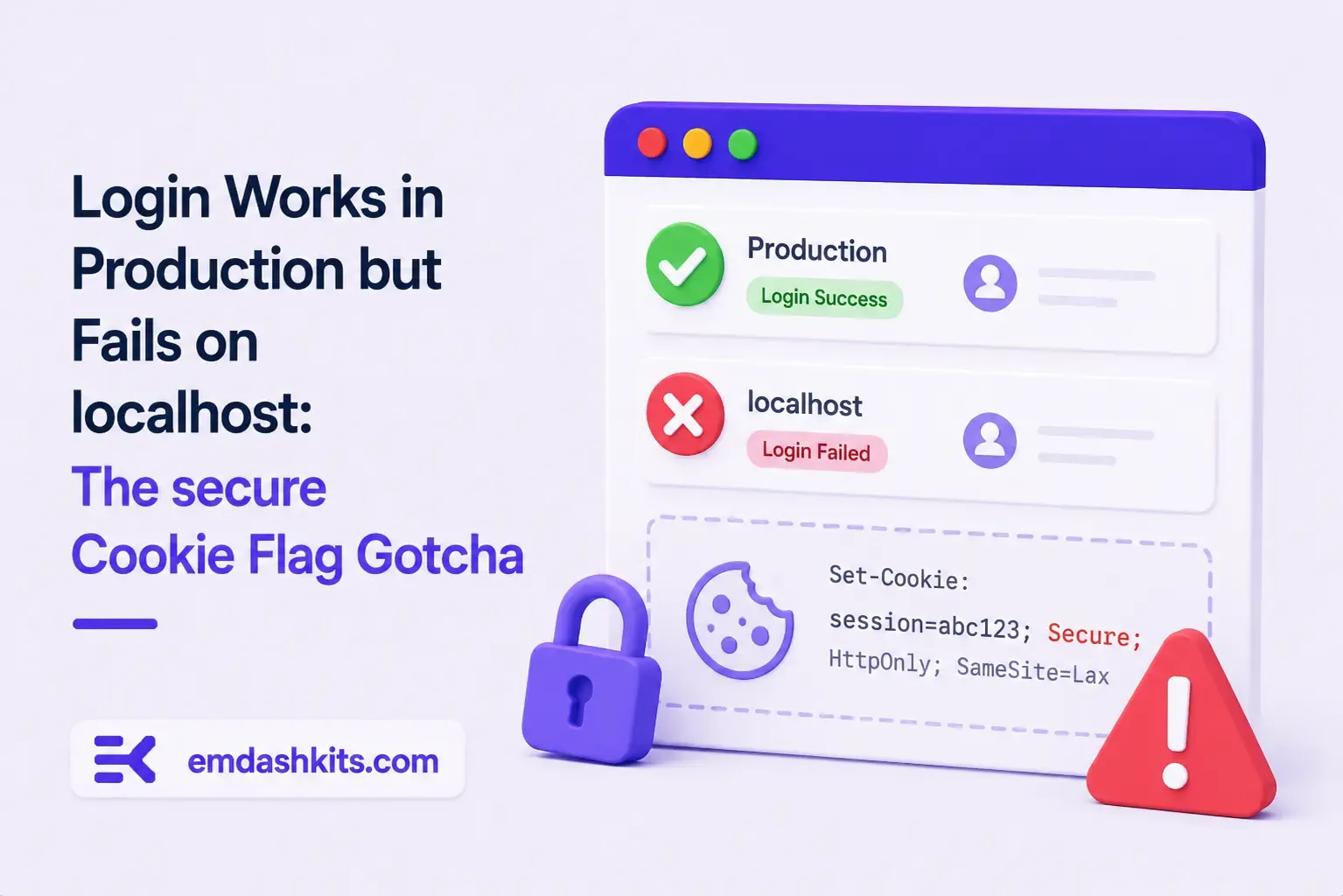
Login Works in Production but Fails on localhost: The secure Cookie Flag Gotcha

July 16, 2026

Login Works in Production but Fails on localhost: The secure Cookie Flag Gotcha

Google Analytics (GA4) Not Tracking Anything and No Console Errors: Check Your CSP First

July 16, 2026

Google Analytics (GA4) Not Tracking Anything and No Console Errors: Check Your CSP First

Native Module Build Fails on Shared Hosting (node-gyp, Old glibc/Python): The .npmrc Fix

July 16, 2026

Native Module Build Fails on Shared Hosting (node-gyp, Old glibc/Python): The .npmrc Fix

Login Works in Production but Fails on localhost: The secure Cookie Flag Gotcha

Login Works in Production but Fails on localhost: The secure Cookie Flag Gotcha

TL;DR — A custom session-cookie login flow appeared to succeed on localhost (the OTP verified, the response looked fine) but every subsequent request to a login-gated page treated the visitor as logged out. Identical code worked fine on the live HTTPS site. The cookie's Secure attribute was hardcoded to true — and per the cookie spec, browsers never store or send a Secure cookie over a plain, non-HTTPS connection.

Table of Contents
  1. Diagnostic
  2. Root cause
  3. Fix
  4. Lessons learned

Diagnostic

Check the actual Set-Cookie response header and the browser's own cookie storage panel — on localhost over http://, the cookie is sent by the server but never actually stored by the browser.

Root cause

// before -- assumes the app is always served over HTTPS
setCookie("session", token, { secure: true, httpOnly: true });
emdashkits.com

A cookie config that quietly assumes "we're always on HTTPS" breaks the instant you test over plain HTTP, which local dev servers commonly are.

Read also:

Fix

// after -- derive secure from the actual request protocol
const isHttps = request.url.startsWith("https://");
setCookie("session", token, { secure: isHttps, httpOnly: true });
emdashkits.com

Lessons learned

  • Any Secure-flagged cookie needs to key off the real request scheme, not an assumption baked in once at cookie-creation time.
  • "Works in production, silently fails in local dev" is a strong signal to check cookie flags before anything else in an auth flow.
  • Check other cookies in the same codebase for the same hardcoded assumption — if one cookie has this bug, sibling cookies set the same way are worth auditing too.
Share
Previous Article

Google Analytics (GA4) Not Tracking Anything and No Console Errors: Check Your CSP First

Comments

Write a comment

Related Articles

Google Analytics (GA4) Not Tracking Anything and No Console Errors: Check Your CSP First

July 16, 2026

Google Analytics (GA4) Not Tracking Anything and No Console Errors: Check Your CSP First

Native Module Build Fails on Shared Hosting (node-gyp, Old glibc/Python): The .npmrc Fix

July 16, 2026

Native Module Build Fails on Shared Hosting (node-gyp, Old glibc/Python): The .npmrc Fix

Uploaded Images Disappear After Every Deploy on Shared Hosting (and Other Reverse-Proxy Gotchas)

July 16, 2026

Uploaded Images Disappear After Every Deploy on Shared Hosting (and Other Reverse-Proxy Gotchas)

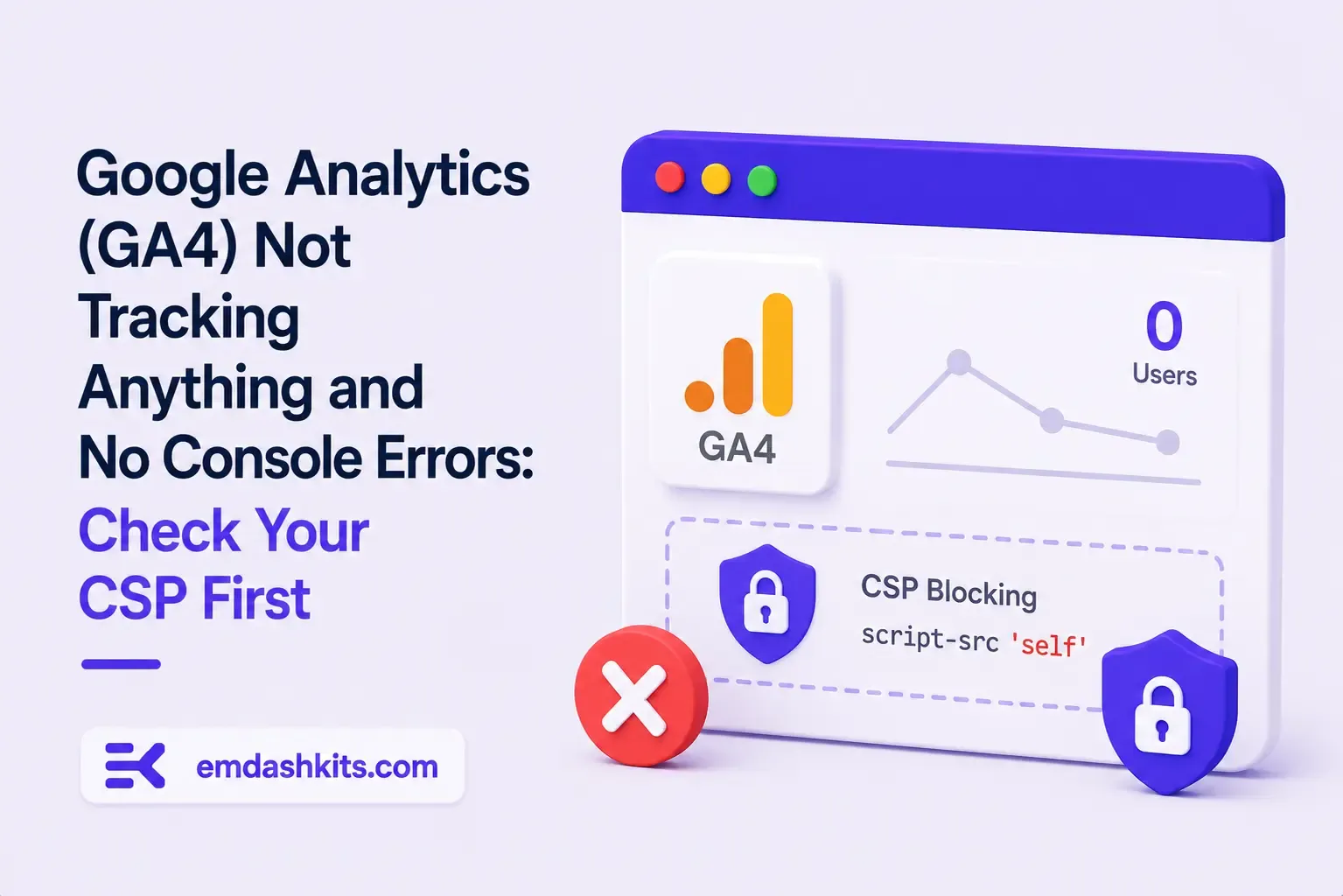
Google Analytics (GA4) Not Tracking Anything and No Console Errors: Check Your CSP First

Google Analytics (GA4) Not Tracking Anything and No Console Errors: Check Your CSP First

TL;DR — GA4's gtag.js snippet was installed correctly, the page loaded with no visible JavaScript error, and GA4's real-time report still showed zero activity. The CMS's default Content-Security-Policy had no allowance for analytics domains and no config option to add one — so every request to Google's tracking endpoints was blocked at the browser level before it could fail loudly.

Table of Contents
  1. Diagnostic
  2. Root cause
  3. Lessons learned

Diagnostic

Check the browser's dedicated CSP violation reporting, not the regular console error list — CSP blocks are reported through their own channel, not thrown as normal script errors, so "no console errors" doesn't mean nothing was blocked.

Root cause

The CSP's script-src and connect-src directives had no entry for googletagmanager.com or google-analytics.com, and the CMS exposed no configuration surface to add one — the only way in was patching the CSP directives directly.

// patch-package: add analytics domains to the existing CSP directives
scriptSrc.push("https://www.googletagmanager.com");
connectSrc.push("https://www.google-analytics.com", "https://www.googletagmanager.com");
emdashkits.com
Read also:

Lessons learned

  • "No console errors" is not proof nothing was blocked — CSP violations live in their own reporting surface and are easy to miss if you're only scanning for red error text.
  • Before adding any third-party script tag to a site with a CSP already in place, check the CSP's directives first rather than assuming a silently-empty analytics dashboard means a snippet-installation mistake.
Share
Previous Article

Native Module Build Fails on Shared Hosting (node-gyp, Old glibc/Python): The .npmrc Fix

Next Article

Login Works in Production but Fails on localhost: The secure Cookie Flag Gotcha

Comments

Write a comment

Related Articles

Login Works in Production but Fails on localhost: The secure Cookie Flag Gotcha

July 16, 2026

Login Works in Production but Fails on localhost: The secure Cookie Flag Gotcha

Native Module Build Fails on Shared Hosting (node-gyp, Old glibc/Python): The .npmrc Fix

July 16, 2026

Native Module Build Fails on Shared Hosting (node-gyp, Old glibc/Python): The .npmrc Fix

Uploaded Images Disappear After Every Deploy on Shared Hosting (and Other Reverse-Proxy Gotchas)

July 16, 2026

Uploaded Images Disappear After Every Deploy on Shared Hosting (and Other Reverse-Proxy Gotchas)